5 Wege, um mehr aus Ihrem Moss Air herauszuholen
Von der Platzierung über die Modi bis hin zur LED – ein praktischer Leitfaden, den Sie noch heute nutzen können
Tags: Moss Air · Tipps · Leitfaden · Moos-Luftbefeuchter · Anwendung
Moss Air funktioniert sofort nach dem Auspacken. Tank füllen, Knopf drücken, fertig.

Doch wo Sie ihn platzieren, welchen Modus Sie verwenden und wie Sie das Wasser pflegen, macht einen echten Unterschied darin, wie stark Sie die Wirkung tatsächlich spüren. Erstaunlich viele Menschen, die denken, ihr Gerät funktioniere nicht gut, übersehen in Wirklichkeit nur ein paar kleine Gewohnheiten.
Egal, ob Sie ihn gerade erst ausgepackt haben oder ihn schon seit Monaten nutzen, hier sind fünf Dinge, die Sie sofort anwenden können.
1. Platzierung – Atemhöhe ist alles
Der Standort Ihres Moss Air ist die größte Einzelvariable dafür, wie sehr Sie die Befeuchtung bemerken.
Auf dem Boden setzt sich der Nebel tief ab und erreicht nie Ihre Nase. Auf einem hohen Regal verteilt er sich über Ihrem Kopf, und die Wirkung verfliegt, bevor sie Sie erreicht.
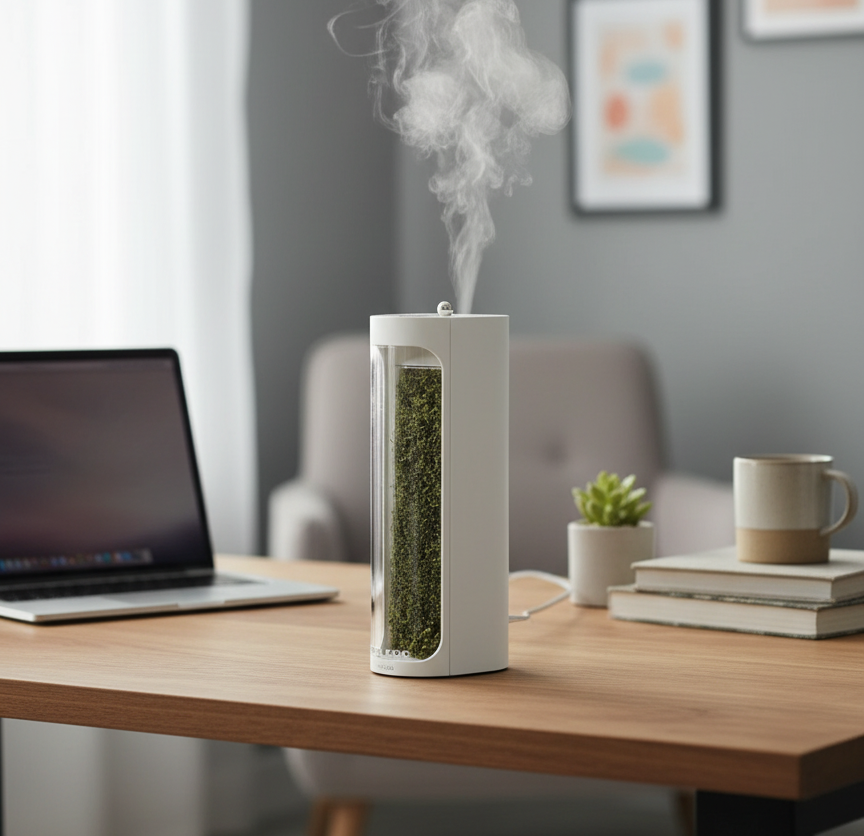
Die beste Position ist auf Atemhöhe, an einem Ort, an dem Sie die meiste Zeit verbringen. Ein Nachttisch, Ihr Schreibtisch oder ein Beistelltisch neben dem Sofa – überall dort, wo Ihr Gesicht 30 cm bis 1 m vom Gerät entfernt ist. In diesem Bereich strömt befeuchtete Luft auf natürliche Weise in Ihre Atemszone.
Achten Sie bei der Wahl des Standorts darauf, dass der Nebel mindestens 20 cm von Möbeln oder Elektronikgeräten entfernt ist, um Feuchtigkeitskontakt zu vermeiden. Und stellen Sie ihn immer auf eine ebene Fläche. Wenn das Gerät gekippt ist, verschiebt sich das Wasser intern auf eine Seite, was zu ungleichmäßiger Vernebelung oder erhöhter Geräuschentwicklung führen kann.
2. Zwei Modi, zwei völlig unterschiedliche Zwecke
Moss Air verfügt über zwei Betriebsmodi: Terrarium-Modus und Luftbefeuchter-Modus. Sie klingen ähnlich, dienen aber völlig unterschiedlichen Zwecken.
Terrarium-Modus – Für das Moos
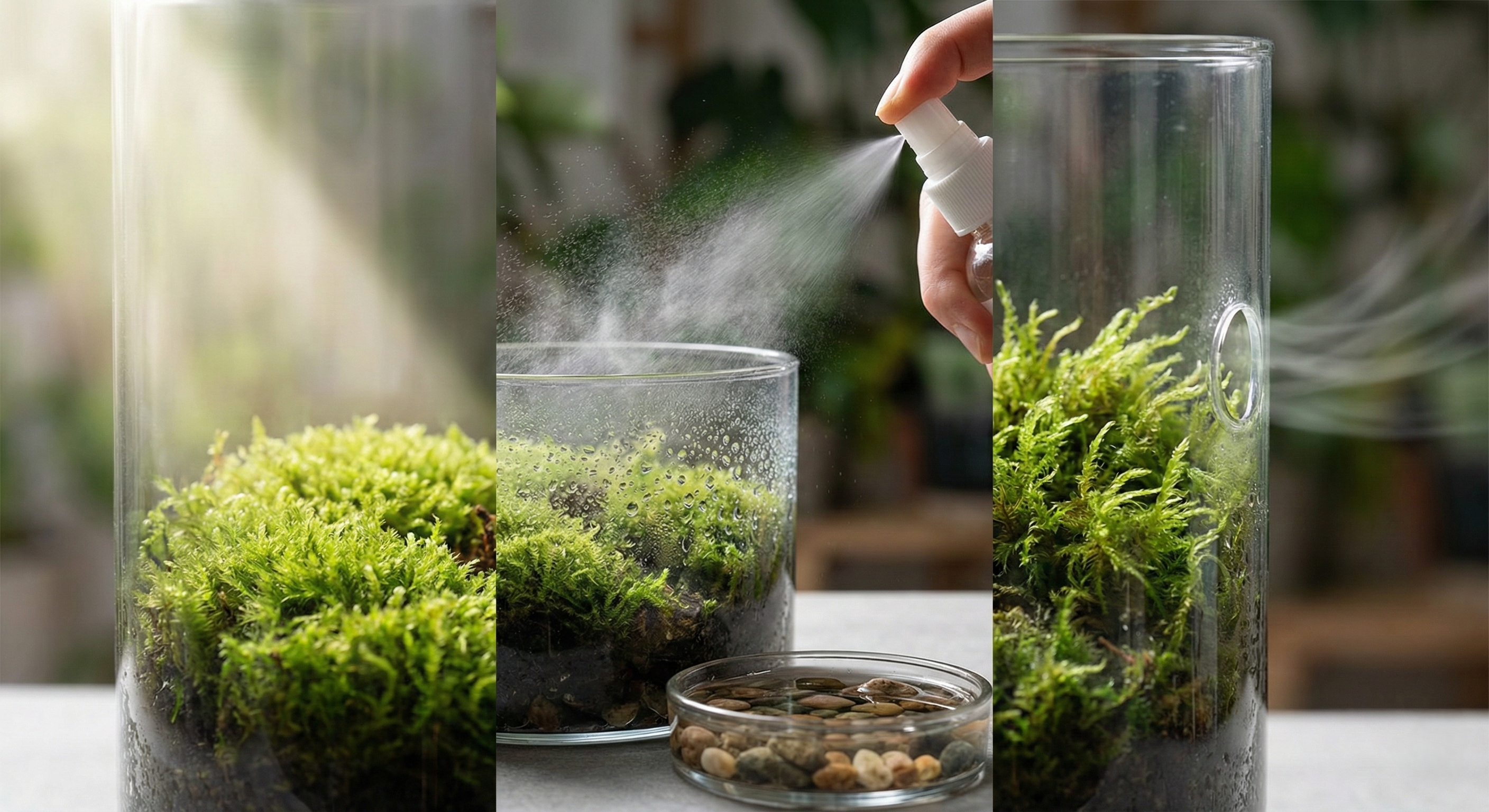
In diesem Modus wird alle 3 Stunden für 5 Minuten mit eingeschalteter LED genebelt. Er wechselt automatisch zwischen 12 Stunden Betrieb und 12 Stunden Ruhe. Der Zweck ist nicht die Raumbefeuchtung – es geht darum, das Moos selbst gesund zu halten.
Wenn Sie den Terrarium-Modus etwa einmal pro Woche laufen lassen, erhält das Moos genug Feuchtigkeit, um in gutem Zustand zu bleiben. Bei voller Ladung hält er etwa 3–4 Tage, sodass die Einrichtung über das Wochenende mehr als ausreichend ist.
Eine Sache, die leicht zu übersehen ist: Öffnen Sie nach der Verwendung des Terrarium-Modus immer die vordere Abdeckung, damit das Moos trocknen kann. Feuchtigkeit ist gut für Moos, aber eine längere Übersättigung nicht. Und lassen Sie es danach nicht in einer dunklen Ecke – lassen Sie die LED an oder stellen Sie es an einen Ort, wo indirektes Licht hinkommt. Das Moos braucht etwas Licht für die Photosynthese.
Luftbefeuchter-Modus – Für Sie
Dies ist der kontinuierliche Nebelmodus. Verwenden Sie ihn in trockenen Jahreszeiten, wenn die Klimaanlage im Sommer stark läuft oder wenn die Winterheizung die Luft austrocknet.
Die Nebelmenge beträgt etwa 40 ml/h. Bei vollem 320-ml-Tank erhalten Sie etwa 3–4 Stunden Dauerbetrieb – genug, um die erste Hälfte einer Nacht Schlaf abzudecken, wenn Sie ihn vor dem Schlafengehen einschalten.
Wenn Sie diesen Modus häufig verwenden, empfehlen wir, das Netzkabel angeschlossen zu lassen.
Terrarium-Modus = für das Moos (einmal pro Woche). Luftbefeuchter-Modus = für Sie (wenn die Luft trocken ist). Verwenden Sie beide regelmäßig, und alles bleibt im Gleichgewicht.
3. Wasser – Leitungswasser ist die richtige Antwort
Viele Benutzer füllen den Tank mit gereinigtem oder destilliertem Wasser, in der Annahme, es sei besser. Beim Moss Air ist es genau umgekehrt. Leitungswasser ist der Standard. Gereinigtes oder destilliertes Wasser kann die ordnungsgemäße Funktion des internen Sensors verhindern, was bedeutet, dass der Nebel möglicherweise überhaupt nicht austritt.
Der Tank fasst 320 ml. Drücken Sie den Entriegelungsknopf auf der Rückseite, füllen Sie bis zur MAX-Linie und bringen Sie ihn wieder an. Ganz einfach.
Wichtig ist, wie oft Sie es wechseln. Wasser, das tagelang im Tank steht, kann Bakterien entwickeln und anfangen zu riechen. Täglicher Wechsel ist ideal. Wenn das nicht realistisch ist, reinigen und füllen Sie den Tank mindestens alle 2–3 Tage nach.
Fügen Sie niemals etwas anderes als Wasser hinzu. Duftstoffe, ätherische Öle, Aromaöle oder andere Zusätze können die Nebeldüse verstopfen oder interne Komponenten beschädigen.
4. Zwei Filter, zwei unterschiedliche Pflegeroutinen
Moss Air verfügt über zwei Arten von Filtern: den Baumwollfilter und den Moosfilter. Sie haben unterschiedliche Funktionen und erfordern unterschiedliche Pflege.
Baumwollfilter – Der Motor der Befeuchtung
Der Baumwollfilter nimmt Wasser auf und wandelt es in Nebel um. Er ist die Kernkomponente, die die Befeuchtung ermöglicht. Das Wichtigste bei der Einrichtung: Weichen Sie ihn vor dem Einsetzen gründlich in Wasser ein. Wenn Sie ihn trocken installieren, kann er das Wasser nicht richtig aufnehmen, und Ihre Nebelleistung sinkt erheblich.
Ersetzen Sie ihn alle 1–2 Monate. Sie können ihn nach vollständiger Trocknung waschen und wiederverwenden, aber wenn er anfängt zu riechen oder sich merklich verfärbt, ist es Zeit für einen neuen.
Moosfilter – Lebendiges Material, andere Regeln
Wenn das Moos zu nass ist, öffnen Sie die vordere Abdeckung und lassen Sie es natürlich an der Luft trocknen. Wenn es kontaminiert aussieht, spülen Sie es vorsichtig unter fließendem Wasser ab und trocknen Sie es dann an einem gut belüfteten Ort ohne direkte Sonneneinstrahlung. Waschen Sie sich immer die Hände, bevor Sie das Moos anfassen – Öle und Rückstände von Ihrer Haut können es beeinträchtigen.
Wird der Nebel schwächer?
Überprüfen Sie der Reihe nach: ① Niedriger Wasserstand → ② Trockener Baumwollfilter → ③ Verstopfte Düse.
Bei einer verstopften Düse reinigen Sie diese vorsichtig mit einem in Essig getauchten Wattestäbchen. Das löst die meisten Fälle.
5. LED – Stimmungslicht und Wachstumsförderung in einem
Die Lichttaste am Moss Air ist nicht nur eine Stimmungsleuchte. Die LED dient auch als zusätzliche Lichtquelle für das Moos.
Moos kann ohne jegliches Licht keine Photosynthese betreiben. Wenn es zu lange in völliger Dunkelheit bleibt, verlangsamt sich das Wachstum. Nach der Verwendung des Terrarium-Modus ist es eine gute Angewohnheit, die LED eine Weile eingeschaltet zu lassen – das Moos ist unmittelbar nach der Bewässerung am aktivsten bei der Photosynthese.
Im Luftbefeuchter-Modus können Sie die LED ruhig ausschalten. Wenn das Licht Sie beim Schlafengehen stört, schalten Sie es einfach aus.
Noch etwas: Sie können die LED unabhängig nutzen, ohne dass eine Befeuchtung läuft. Drücken Sie einfach die Lichttaste. An Tagen, an denen Sie keine Luftfeuchtigkeit benötigen, funktioniert sie perfekt als dezente Nachttischlampe oder Umgebungslicht.