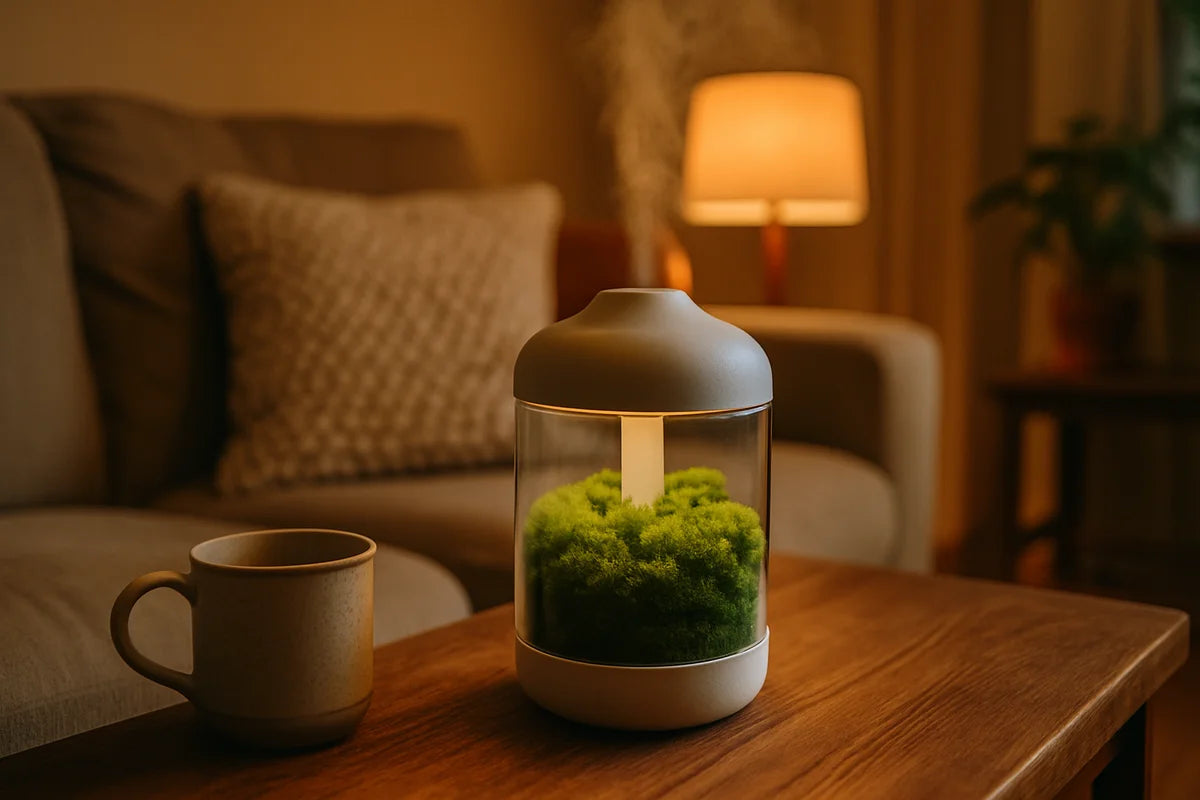
Wie man einen DIY Mooswand-Luftreiniger mit Ventilator baut (Der tatsächlich Sinn macht)
Eine Mooswand sieht großartig aus. Sie kann auch bei Schall und Feuchtigkeit helfen. Aber kann sie Ihre Luft wie ein echter Reiniger säubern? Nicht auf die gleiche Weise, wie es ein HEPA-Filter kann. Dennoch können Sie einen DIY Mooswand-Luftreiniger mit Ventilator bauen, der Luft über eine große, texturierte Oberfläche bewegt, etwas Staub einfängt und einen beruhigenden, grünen Blickfang in einem Raum schafft.
Dieser Leitfaden zeigt Ihnen, wie Sie einen solchen sicher bauen, was er kann und was nicht, und wie Sie die besten Ergebnisse erzielen, ohne Zeit oder Geld zu verschwenden.
Was ein Mooswand-Luftreiniger kann (und was nicht)

Bevor Sie Holz schneiden oder einen Ventilator kaufen, machen Sie sich über das Ziel klar.
Was er gut kann
- Luft durch eine dekorative Wandverkleidung bewegen, damit die Luft im Raum stärker zirkuliert
- Einige größere Staubpartikel auf einem Vorfilter und texturierten Oberflächen einfangen
- Einen kleinen Feuchtigkeitspuffer hinzufügen, wenn Sie lebendes Moos verwenden (aber lebendes Moos in Innenräumen ist heikel)
- Wahrgenommene „stehende Luft“ reduzieren, indem die Mischung und der Luftstrom erhöht werden
- Viel besser aussehen als ein Luftreiniger aus Plastik
Was er nicht kann (Seien Sie ehrlich dabei)
- Er wird keinen HEPA-Reiniger für Rauch, Allergene oder Feinstaub ersetzen
- Er wird Gase oder Gerüche nicht zuverlässig entfernen, es sei denn, Sie fügen Aktivkohle hinzu
- Er wird einen Raum in keiner sinnvollen Weise „mit Sauerstoff anreichern“
Wenn Sie mit Asthma, Waldbrandrauch oder starken Allergien zu tun haben, verwenden Sie einen geeigneten Luftreiniger. Die Anleitung der EPA zu Luftreinigern und Filtern erläutert, was funktioniert und was nicht.
Designentscheidungen: konserviertes Moos vs. lebendes Moos
Sie haben zwei Hauptwege. Einer ist einfach und risikoarm. Der andere braucht Pflege.
Konserviertes Moos (empfohlen)
Konserviertes (stabilisiertes) Moos ist echtes Moos, das so behandelt wurde, dass es ohne Wasser und Licht weich bleibt. Es wächst nicht. Es muss auch nicht besprüht werden, was wichtig ist, da Feuchtigkeit plus Ventilator schnell zu Schimmel führen kann.
- Vorteile: geringer Pflegeaufwand, keine Bewässerung, stabile Form, geringeres Schimmelrisiko
- Nachteile: fungiert nicht als Luftbefeuchter, kann teurer sein
Lebendes Moos (nur wenn Sie ein Pflanzenprojekt möchten)
Lebendes Moos benötigt stetige Feuchtigkeit, das richtige Licht und einen Luftstrom, der es nicht austrocknet. Viele Innenräume sind dafür nicht geeignet. Wenn Sie sich für lebendes Moos entscheiden, behandeln Sie den Teil „Luftreiniger“ als sekundär und konzentrieren Sie sich auf die Pflanzengesundheit und die Schimmelkontrolle.
- Vorteile: lebendige Oberfläche, kann die Luftfeuchtigkeit etwas puffern
- Nachteile: benötigt Feuchtigkeitsmanagement, höheres Schimmelrisiko, mehr Wartung
Wenn Sie mehr über Raumschadstoffe und warum Pflanzen allein sie nicht lösen, erfahren möchten, bietet die Übersicht der Weltgesundheitsorganisation über Luftverschmutzung und Gesundheit eine nützliche Grundlage.
Wie der DIY Mooswand-Luftreiniger mit Ventilator funktioniert
Die Grundidee ist einfach: Ein leiser Ventilator zieht Raumluft durch eine Frontplatte. Hinter dieser Platte befindet sich ein Vorfilter (um Flusen und Staub aufzufangen) und eine optionale Kohleschicht (zur leichten Geruchsbekämpfung). Das Moos befindet sich vorne als sichtbares Finish, aber die versteckten Filterschichten erledigen den größten Teil der „Reinigungsarbeit“.
Stellen Sie sich ihn als Hybrid vor: teils Wandkunst, teils energiearmer Luftbeweger mit leichter Filterung.
Beste Anwendungsfälle
- Schlafzimmer, in denen Sie einen leisen Luftstrom und ein sanfteres Aussehen wünschen
- Heimbüros, die stickig wirken
- Eingangsbereiche, in denen Sie ein Statement-Stück wünschen
Keine gute Passform
- Küchenbereiche mit Fett in der Luft
- Badezimmer (Feuchtigkeitsschwankungen und Wasserkontakt)
- Jeder Raum mit bekannten Schimmelproblemen
Materialien und Werkzeuge (mit praktischen Optionen)
Sie können dies mit grundlegenden Werkzeugen und handelsüblichen Teilen bauen. Die folgende Liste geht von einer Wandplatte von etwa 24 x 36 Zoll aus. Vergrößern oder verkleinern Sie sie nach Belieben.
Kernmaterialien
- Rahmen: 1x3 oder 1x4 Holz, oder eine flache Sperrholzkiste
- Rückwand: dünnes Sperrholz oder starre PVC-Platte
- Frontgitterlage: Holzleisten, perforierte Hartfaserplatte oder eine gefräste Platte
- Vorfilter: zugeschnittene HVAC-Filtermedien (MERV 6-8 funktioniert gut für den Luftstrom)
- Optionale Kohleschicht: Aktivkohle-Vorfiltermatte
- Ventilator: leiser 120 mm bis 200 mm DC-Ventilator, oder ein schlanker Inline-Rohrventilator für mehr Zugkraft
- Stromversorgung: DC-Adapter passend zur Lüfterspannung (oft 12V)
- Moos: konserviertes Plattenmoos, Rentierflechte oder gemischtes konserviertes Moos
- Klebstoff: Heißkleber für konserviertes Moos, oder Kontaktkleber für Bastelarbeiten
- Befestigungsmaterial: French Cleat oder Hochleistungs-Wandanker
- Optional: Lüfterdrehzahlregler (Inline) zur Abstimmung von Geräuschpegel und Luftstrom
Werkzeuge
- Bohrmaschine und Bohrer
- Säge (Handsäge, Kreissäge oder Gehrungssäge)
- Heftklammerpistole oder kleine Schrauben
- Abisolierzange (falls für die Lüfterverkabelung erforderlich)
- Maßband und Winkel
Möchten Sie den Luftstrom mit mehr Sicherheit dimensionieren? Verwenden Sie einen praktischen Rechner wie den CFM-Rechner von Omni, um zu überprüfen, wie viel Luft Sie für Ihre Raumgröße bewegen.
Schritt-für-Schritt-Anleitung: Ein sauberes, sicheres Layout
Dieser Aufbau verwendet ein „Durchzug“-Design: Der Ventilator zieht Luft durch den Filter und bläst sie nach hinten oder zur Seite aus. Dadurch wird verhindert, dass das Moos vom Luftstrom getroffen wird und der Filter seine Arbeit besser erledigt.
1) Größe wählen und Luftstrom planen
Eine gute Anfangsgröße ist 24 x 36 Zoll mit einem 2,5 bis 4 Zoll tiefen Rahmen. Größer bedeutet mehr Filterfläche, was weniger Widerstand und weniger Lärm bedeutet.
- Für ein kleines Schlafzimmer sollten Sie 50-150 CFM echten Luftstrom bei einer leisen Einstellung anstreben.
- Wenn Sie einen kleinen PC-Lüfter verwenden, erhalten Sie einen geringen Luftstrom, aber nahezu geräuschlosen Betrieb.
- Wenn Sie einen Inline-Kanalventilator verwenden, erhalten Sie mehr Luftstrom, benötigen aber eine bessere Dämpfung.
Wenn Sie einen Realitätscheck wünschen, warum der Luftstrom wichtig ist, sehen Sie sich an, wie CADR mit der Reinigungsgeschwindigkeit zusammenhängt. AHAM erklärt die Grundlagen in seiner CADR-Übersicht.
2) Bauen Sie den Rahmen
- Schneiden Sie Holz, um einen rechteckigen Rahmen zu erstellen.
- Verschrauben Sie es und stellen Sie sicher, dass es rechtwinklig ist.
- Fügen Sie eine Mittelstrebe hinzu, wenn die Platte breit ist, damit sie sich an der Wand nicht verdreht.
Halten Sie die Rahmentiefe ausreichend, um Ihre Filterschichten zu halten, ohne sie zu zerdrücken. Filter benötigen Luftspalte.
3) Die Rückwand anbringen und die Abluft planen
- Befestigen Sie die Rückwand mit Schrauben am Rahmen.
- Entscheiden Sie, wo die Luft austritt: nach hinten (benötigt Wandabstand) oder seitlich (sauberere Wandmontage).
- Wenn die Abluft nach hinten erfolgt, fügen Sie 1/2 Zoll Abstandshalter oder eine Latte hinzu, die einen Spalt hinter dem Gerät erzeugt.
Wenn Sie seitlich ausblasen, schneiden Sie zwei lange Schlitze nahe den oberen Kanten. Heiße Luft steigt auf, und ein seitlicher Auslass oben fühlt sich im Raum oft sanfter an.
4) Installieren Sie den Ventilator (auf Ruhe kommt es an)
- Schneiden Sie eine Ventilatoröffnung in die Rückwand (oder montieren Sie den Ventilator über einem Loch).
- Verwenden Sie Gummitüllen oder Schaumstoffband, um Vibrationen zu reduzieren.
- Verkabeln Sie den Ventilator mit einem passenden DC-Adapter und testen Sie ihn, bevor Sie alles schließen.
Wählen Sie einen Ventilator, der für geringe Geräuschentwicklung ausgelegt ist. Achten Sie auf Spezifikationen, die Dezibel (dBA) und Luftstrom (CFM) angeben. Wenn Sie tiefer in die Bedeutung von Ventilatorbewertungen und den Einfluss des statischen Drucks auf den Luftstrom durch Filter eintauchen möchten, erklärt dieser Leitfaden von AC Service Tech zum statischen Druck das Konzept in einfachen Worten.
5) Fügen Sie die Filterschichten hinzu (hier passiert die Reinigung)
- Erstellen Sie ein einfaches Filtergestell: dünne Holzleisten oder eine eingeklammerte Leiste, die das Filterblatt flach hält.
- Legen Sie zuerst die Vorfilterschicht ein (am nächsten zur Vorderseite).
- Fügen Sie dahinter eine Aktivkohlematte hinzu, wenn Sie eine gewisse Geruchshilfe wünschen.
- Stellen Sie sicher, dass Sie diese Schichten entfernen und ersetzen können, ohne das Moos abzureißen.
Übertreiben Sie es nicht mit der Filtration. Wenn Sie dichte Filter einbauen, sinkt der Luftstrom und der Lärm steigt. Ein breiter, widerstandsarmer Vorfilter funktioniert oft am besten für diesen Stil eines DIY Mooswand-Luftreinigers mit Ventilator.
6) Bauen Sie die Frontplatte so, dass Luft durchdringen kann
Sie brauchen eine ansprechende Front, die trotzdem Luft durchlässt.
- Holzleisten mit 1/4 bis 3/8 Zoll Spalt sehen sauber aus und lassen die Luft gut durch.
- Lochplatten funktionieren, können aber pfeifen, wenn die Löcher klein sind.
- Ein gefrästes Muster sieht großartig aus, wenn Sie die Werkzeuge dafür haben.
Befestigen Sie die Frontplatte mit Schrauben, damit Sie sie später zum Filterwechsel öffnen können.
7) Befestigen Sie das Moos, ohne den Luftstrom zu blockieren
Hier gehen die meisten DIY-Bauten schief. Wenn Sie Moos in jede Öffnung stopfen, ersticken Sie den Luftstrom und verwandeln den Ventilator in einen lauten Heizer.
- Legen Sie das Moos in Gruppen aus und lassen Sie die Hauptansaugbereiche frei.
- Kleben Sie Moos an feste Teile der Vorderseite, nicht über Luftspalten.
- Verwenden Sie kleine Mengen Klebstoff. Zu viel Klebstoff kann riechen und das Moos verhärten.
Wenn Sie einen „Full Wall“-Look wünschen, behalten Sie einen versteckten Ansaugbereich unten oder an den Seiten bei und platzieren Sie dichtes Moos dort, wo die Luft nicht strömen soll.
8) Sicher an der Wand montieren
- Verwenden Sie eine französische Aufhängeleiste (French Cleat) für eine stabile Befestigung und einfache Demontage.
- Wenn Sie keine Bolzen treffen können, verwenden Sie Schwerlastanker, die über dem Gewicht des Geräts bewertet sind.
- Verlegen Sie das Stromkabel sauber und halten Sie es von Quetschstellen fern.
Wie man bessere Luftergebnisse erzielt (ohne vorzugeben, dass es HEPA ist)
Möchten Sie, dass dieses Projekt mehr als nur Deko leistet? Konzentrieren Sie sich auf Luftstrom, Filterfläche und Platzierung.
Dorthin stellen, wo die Luft zirkuliert
- Nahe (aber nicht verdeckt von) einer Tür, damit er gemischte Luft aufnimmt
- Ein paar Meter vom Bett entfernt, damit Sie nachts eine sanfte Zirkulation spüren
- Vermeiden Sie Ecken, wo die Luft stillsteht
Einen einfachen Test zum Überprüfen des Luftstroms verwenden
- Halten Sie einen Gewebestreifen in die Nähe der Ansaugbereiche. Er sollte gleichmäßig angesaugt werden.
- Wenn der Ventilator angestrengt klingt, reduzieren Sie die Filterdichte oder vergrößern Sie den Ansaugbereich.
Kombinieren Sie es mit den Dingen, die wirklich funktionieren
Wenn Sie eine echte Partikelentfernung wünschen, verwenden Sie zusätzlich einen eigenständigen HEPA-Reiniger oder bauen Sie ein bewährtes DIY-Gerät wie einen Kastenlüfterfilter. Die Tests der UC Davis zu DIY-Luftreinigern geben einen fundierten Einblick in das, was zur Partikelreinigung funktioniert.
Wartung: Sauber, leise und nicht eklig halten
Eine Mooswand bleibt nur dann schön, wenn Sie sie pflegen. Die gute Nachricht: Konserviertes Moos macht dies einfach.
Filterwechsel-Intervall
- Vorfilter: alle 4-8 Wochen in den meisten Haushalten, bei Haustieren früher
- Aktivkohlematte (falls verwendet): alle 2-3 Monate, oder wenn Gerüche wiederkehren
Staubkontrolle
- Verwenden Sie eine weiche Bürste oder einen Haartrockner auf kühler, niedriger Stufe, um Staub vom konservierten Moos zu entfernen.
- Saugen Sie Moos nicht direkt ab, es sei denn, Sie testen zuerst eine kleine Stelle.
Schimmel- und Feuchtigkeitssicherheit
- Besprühen Sie konserviertes Moos nicht.
- Wenn Sie lebendes Moos verwenden, halten Sie ein Hygrometer bereit und achten Sie auf feuchte Gerüche.
- Wenn etwas muffig riecht, schalten Sie den Ventilator aus, öffnen Sie die Platte und überprüfen Sie den Filter und das Innere.
Häufige Fehler (und wie man sie vermeidet)
- Das Ansaugloch mit Moos blockieren: Klare Wege für den Lufteintritt lassen.
- Einen dichten Ofenfilter verwenden: Filter mit hohem MERV-Wert können kleine Ventilatoren überlasten.
- Bündige Montage an der Wand mit Heckauspuff: einen Spalt lassen oder zur Seite entlüften.
- Zugangsabdeckungen weglassen: Sie werden Filter austauschen, planen Sie dies also ein.
- Zu lauten Betrieb: Ein leiseres Gerät läuft häufiger, was mehr hilft als kurze, laute Stöße.
Einfache Upgrade-Optionen
Fügen Sie einen einfachen Luftqualitätsmonitor hinzu
Ein kleiner PM2.5-Monitor hilft Ihnen zu erkennen, ob Änderungen einen Unterschied machen, insbesondere beim Kochen oder bei Rauchentwicklung.
Einen Lüfterregler verwenden
Ein 10-Dollar-Drehzahlregler kann den Lärm reduzieren und Ihnen ermöglichen, das Gerät den ganzen Tag laufen zu lassen.
Einen größeren Filterbereich bauen
Wenn Sie eine bessere Leistung wünschen, gehen Sie größer, nicht dichter. Mehr Oberfläche ist in der Regel besser als ein engerer Filter in einem kleinen DIY-Bau.
Fazit
Ein DIY Mooswand-Luftreiniger mit Ventilator funktioniert am besten, wenn Sie ihn als leises Luftstrom- und Leichtfiltrationsprojekt mit grünem Finish betrachten. Bauen Sie ihn um einen austauschbaren Vorfilter, halten Sie die Luftwege offen und montieren Sie ihn so, dass er „atmen“ kann. Sie erhalten Wandkunst, die auch dazu beiträgt, dass sich der Raum frischer anfühlt, und Sie vermeiden die häufige Falle, von Moos die Arbeit eines HEPA-Filters zu erwarten.