Mosslab Moos-Lebendmoos-Terrarium-Luftbefeuchter: Was es ist, wie es funktioniert und wie man es richtig verwendet
Ein Lebendmoos-Terrarium ist wie ein kleines Stück Wald, das man auf dem Schreibtisch haben kann. Weiche grüne Polster, winzige Stiele und der sanfte Glanz der Feuchtigkeit auf Glas können einen Raum schnell beruhigen. Das Schwierigste ist, das Moos glücklich zu halten. Die meisten Moose brauchen eine gleichmäßige Luftfeuchtigkeit, sanftes Licht und sauberes Wasser. Fehlt eines davon, wird es braun, knusprig oder schleimig.
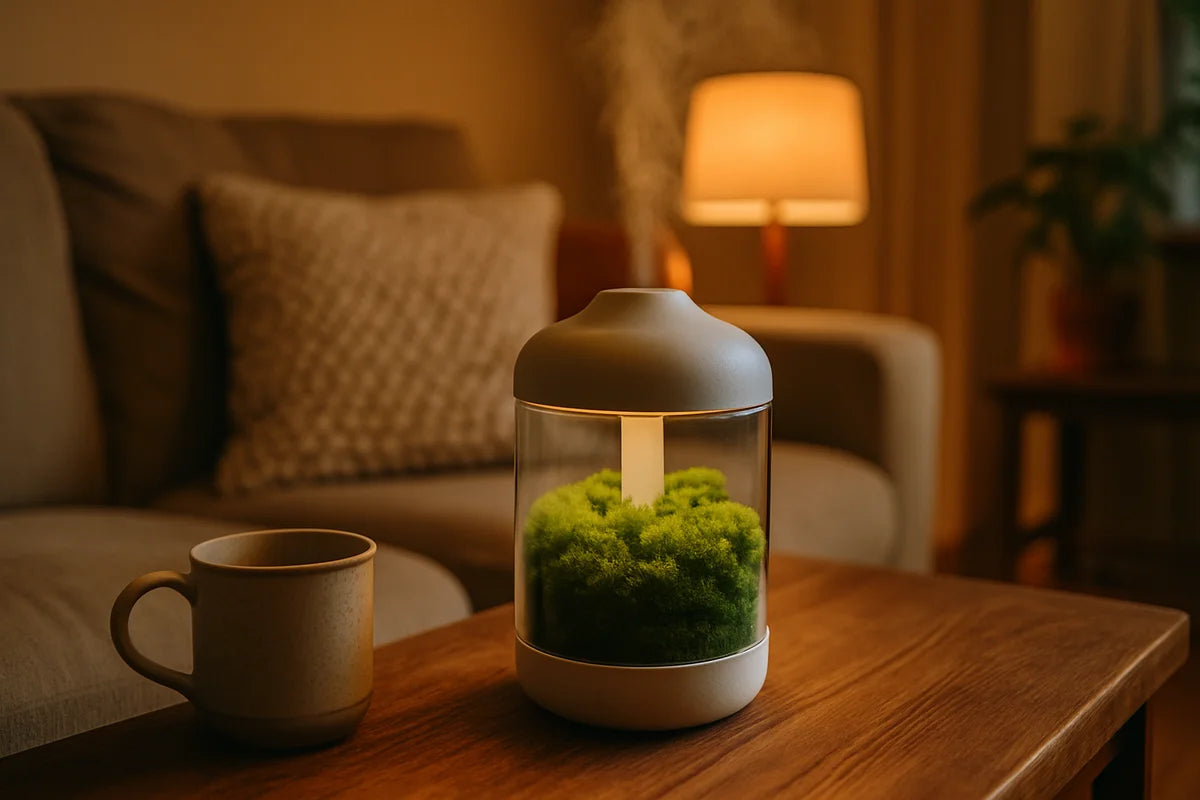
Hier kommt die Idee eines Mosslab Moos-Lebendmoos-Terrarium-Luftbefeuchters ins Spiel. Einige Aufbauten verwenden einen echten Luftbefeuchter in der Nähe. Andere nutzen ein eingebautes Sprühsystem, einen Kapillarstrang oder sogar einen einfachen „geschlossenen Glas“-Ansatz, der Feuchtigkeit wie ein kleines Wettersystem speichert. Dieser Leitfaden erklärt, was wichtig ist und was nicht, und wie man zuverlässige Ergebnisse erzielt, ohne das Terrarium in einen Sumpf zu verwandeln.
Warum Luftfeuchtigkeit für Lebendmoos wichtig ist

Moos verhält sich nicht wie eine Zimmerpflanze. Es hat keine echten Wurzeln. Stattdessen nimmt es Wasser über seine Oberfläche auf. Das bedeutet, dass Luftfeuchtigkeit und Oberflächenfeuchtigkeit wichtiger sind als „das Gießen des Bodens“.
Wenn die Luft in Ihrem Terrarium zu trocken bleibt, verliert Moos schneller Wasser, als es es ersetzen kann. Wenn es zu nass bleibt und keine Luftzirkulation vorhanden ist, laden Sie Schimmel, Algen und Fäulnis ein. Ihr Ziel ist eine stabile Luftfeuchtigkeit mit kurzem Luftaustausch, nicht ständige Nässe.
Wenn Sie die Wissenschaft hinter der Raumluftfeuchtigkeit und den Komfortbereichen wissen möchten, bietet der Leitfaden der EPA zur Raumluftqualität einen soliden Überblick über Feuchtigkeitsprobleme wie Schimmel und Kondensation.
Welchen Feuchtigkeitsbereich bevorzugt Moos?
Viele gängige Terrarienmoose gedeihen am besten, wenn das Gefäß die meiste Zeit feucht bleibt, oft im Bereich von 70-95% innerhalb des Terrariums. Sie müssen keine genauen Zahlen jagen, aber Sie brauchen ein konsistentes Muster:
- Meist feuchte Luft
- Feuchte (nicht tropfende) Moosoberflächen
- Kurze „Frischluft“-Momente, um Stagnation zu vermeiden
Ein geschlossenes Terrarium kann diese Bedingungen von selbst erreichen. Ein offenes Terrarium kann dies in der Regel nicht ohne zusätzliche Hilfe, und hier kann ein Luftbefeuchter-Ansatz sinnvoll sein.
Was „Mosslab Moos-Lebendmoos-Terrarium-Luftbefeuchter“ in der Praxis bedeuten kann
Die Leute verwenden diesen Ausdruck auf verschiedene Weisen. Sie werden ihn im Zusammenhang mit bestimmten Moosmarken, Schau-Terrarien oder Schreibtisch-Setups sehen, die einen Luftbefeuchter verwenden, um Moos grün zu halten. Konzentrieren Sie sich nicht auf Bezeichnungen, sondern auf den Mechanismus. Die meisten „Befeuchter“-Strategien für Moos-Terrarien fallen in vier Kategorien.
1) Geschlossenes Terrarium: die selbstbefeuchtende Methode
Dies ist der zuverlässigste Weg für Anfänger. Ein größtenteils geschlossener Behälter (Glas, Glocke oder versiegeltes Terrarium) wird zu seinem eigenen Luftbefeuchter. Wasser verdunstet, kondensiert am Glas und tropft wieder herunter. Sie sprühen weniger, machen sich weniger Sorgen und erzielen stabilere Ergebnisse.
Nachteil: Wenn Sie zu viel gießen oder zu viel Licht geben, können Sie Wärme einschließen und Algen oder Schimmel verursachen. Sie beheben dies mit weniger Wasser, weniger Licht und kurzem täglichen Lüften, bis es sich stabilisiert.
2) Offenes Terrarium plus Raumbefeuchter
Wenn Ihr Terrarium offen ist (wie ein Schalengarten oder eine breite Schale), kann ein kleiner Raumbefeuchter in der Nähe helfen. Dies kann in trockenen Häusern, beheizten Wohnungen oder Büros mit starker Klimaanlage gut funktionieren.
Nachteil: Ein Raumbefeuchter erhöht die Luftfeuchtigkeit für alles, nicht nur für Ihr Moos. Das kann zu Fensterkondensation, Hausstaubmilbenwachstum und Schimmel führen, wenn Sie es übertreiben. Verwenden Sie ein Hygrometer und streben Sie einen vernünftigen Raumbereich an, und lassen Sie das Terrarium dann von selbst ein etwas höheres Mikroklima schaffen.
Wenn Sie einen praktischen, leicht verständlichen Überblick über Ziele für die Raumluftfeuchtigkeit und warum „zu hoch“ nach hinten losgehen kann, wünschen, ist dieser Leitfaden von Energy Vanguard zur Raumluftfeuchtigkeit eine gute Lektüre.
3) Gezieltes Sprühen: manuell oder automatisch
Einige „Terrarienbefeuchter“-Setups sind eigentlich Sprühsysteme. Das kann so einfach sein wie eine feine Sprühflasche oder so komplex wie ein automatischer Sprüher mit Zeitschaltuhr.
- Manuelles Sprühen funktioniert, wenn Sie die Routine genießen und Ihr Zeitplan stabil bleibt.
- Automatisches Sprühen hilft, wenn Sie reisen oder Ihre Raumluft stark schwankt.
Nachteil: Sprühen kann zu nassem Glas und durchnässtem Moos führen, wenn Sie zu oft sprühen. Moos mag feucht, nicht ertränkt.
4) Docht und Reservoir: langsame Feuchtigkeit ohne Sprühen
Dieser Ansatz verwendet ein kleines Wasserreservoir und einen Docht (Baumwollschnur, Filz oder Kapillarmatte). Wasser steigt am Docht auf und verdunstet langsam, wodurch die Luftfeuchtigkeit erhöht wird, ohne das Moos zu besprühen.
Nachteil: Stehendes Wasser plus Licht kann Algenwachstum fördern. Halten Sie Reservoirs dunkel oder schattig und reinigen Sie sie häufig.
So wählen Sie das richtige Setup für Ihr Terrarium aus
Bevor Sie Geräte kaufen, beantworten Sie drei Fragen. Ihre Antworten werden Sie zum besten „Mosslab Moos-Lebendmoos-Terrarium-Luftbefeuchter“-Stil für Ihren Raum führen.
Ist Ihr Terrarium geschlossen, teilweise geschlossen oder offen?
- Geschlossen: Sie brauchen wahrscheinlich keinen Raumbefeuchter. Sie brauchen Zurückhaltung.
- Teilweise geschlossen (Deckel mit Belüftungsschlitzen): Sie benötigen möglicherweise leichtes Besprühen und gelegentliches Lüften.
- Offen: Sie benötigen wahrscheinlich entweder häufiges Besprühen oder Unterstützung der Raumluftfeuchtigkeit.
Wie trocken ist Ihr Zimmer?
Raten Sie nicht. Messen Sie. Ein billiges Hygrometer sagt Ihnen mehr als stundenlanges Foren-Scrollen. Viele Haushalte fallen im Winter unter 30 %. Das ist hart für offene Moos-Displays.
Für einen tieferen Einblick in die Feuchtigkeitsmessung und warum Hygrometer driften, erklärt die NIST-Seite zur Feuchtigkeitsmessung die Grundlagen und warum die Genauigkeit variieren kann.
Wie viel Zeit möchten Sie für die Pflege aufwenden?
- Geringer Aufwand: geschlossenes Terrarium mit gelegentlichem leichtem Sprühnebel
- Mittlerer Aufwand: offenes Terrarium mit täglichen kurzen Kontrollen
- Geringer Aufwand, aber mit Ausrüstung: automatisches Sprühen oder ein Luftbefeuchter in der Nähe
Ein Moosterrarium bauen, das feucht bleibt, ohne ekelhaft zu werden
Luftfeuchtigkeit ist nur ein Teil des Rätsels. Wenn Sie möchten, dass Moos monatelang grün bleibt, brauchen Sie sauberes Wasser, die richtigen Schichten und vernünftiges Licht.
Verwenden Sie das richtige Wasser
Viele Moosprobleme beginnen damit, dass sich Mineralien aus dem Leitungswasser auf empfindlichen Geweben ablagern. Wenn Ihr Leitungswasser hart ist, wechseln Sie zu destilliertem Wasser oder Umkehrosmosewasser. Wenn Sie bereits weiße Krusten auf dem Moos oder Glas sehen, ist das ein Hinweis.
Terrarienschichten, die helfen, die Luftfeuchtigkeit stabil zu halten
Sie brauchen keinen komplizierten Aufbau, aber ein paar Schichten erleichtern die Feuchtigkeitsregulierung:
- Drainageschicht (kleine Steine oder Blähton), um überschüssiges Wasser vom Moos fernzuhalten
- Trennschicht (Gitter), um zu verhindern, dass Substrat in die Drainage sinkt
- Substratschicht, die Feuchtigkeit speichert, aber dennoch atmungsaktiv ist (oft eine Mischung aus Kokosfasern, Sphagnum und feiner Rinde)
Wenn Sie eine solide Anleitung zum Bau von Terrarien von einer spezialisierten Website wünschen, sind die Terrarien-Ressourcen von SerpaDesign praktisch und leicht verständlich.
Licht: hell genug, nicht heiß
Moos mag helles, indirektes Licht. Zu wenig Licht führt zu schwachem Wachstum und einer matten Farbe. Zu viel direkte Sonne kocht das Terrarium und erhöht die Verdunstung.
- In der Nähe eines Nord- oder Ostfensters funktioniert es oft gut.
- Wenn Sie eine Wachstumslampe verwenden, halten Sie sie moderat und achten Sie auf Hitze.
Wenn Ihr Glas jeden Tag stark beschlägt und nie klar wird, verwenden Sie möglicherweise zu viel Wasser oder zu viel Licht. Wenn es in einem geschlossenen Glasgefäß überhaupt nie beschlägt, ist es möglicherweise zu trocken.
Wie man einen Luftbefeuchter mit Moos verwendet (ohne Schimmel zu verursachen)
Wenn Sie entscheiden, dass ein Luftbefeuchter für Ihr Mosslab Moos-Lebendmoos-Terrarium-Luftbefeuchter-Setup sinnvoll ist, verwenden Sie ihn wie ein Werkzeug, nicht wie eine Krücke.
Schritt 1: Legen Sie ein Ziel für die Raumluftfeuchtigkeit fest
Für die meisten Haushalte ist eine Raumluftfeuchtigkeit von 40-55 % ein sicherer Bereich, der offenen Moosdisplays hilft, ohne ständige Kondensation an den Fenstern hervorzurufen. In sehr kalten Klimazonen müssen Sie möglicherweise niedriger bleiben, um zu vermeiden, dass sich Wasser auf kalten Oberflächen ansammelt.
Schritt 2: Platzieren Sie den Luftbefeuchter gezielt
- Halten Sie ihn einige Meter entfernt, damit er das Terrarium nicht besprüht und eine Seite durchnässt.
- Richten Sie den Nebel nicht direkt auf Regale oder Wände.
- Halten Sie ihn von Elektronik und Büchern fern.
Schritt 3: Belüften Sie das Terrarium gezielt
Stagnierende Luft verursacht mehr Probleme als eine leicht niedrige Luftfeuchtigkeit. Wenn Sie eine höhere Luftfeuchtigkeit betreiben, planen Sie kurze Belüftungsphasen ein:
- Öffnen Sie den Deckel für die erste Woche täglich 5-15 Minuten lang.
- Nachdem es sich stabilisiert hat, lüften Sie 2-4 Mal pro Woche.
- Wenn Sie Schimmel oder einen sauren Geruch feststellen, lüften Sie täglich und reduzieren Sie das Besprühen.
Für klare Anleitungen zum Schimmelrisiko und zur Feuchtigkeitskontrolle in Gebäuden erläutern die Schimmelressourcen der CDC, was das Wachstum antreibt und wie man es reduzieren kann.
Häufige Moosterrarienprobleme und schnelle Lösungen
Moos wird braun und knusprig
- Ursache: geringe Luftfeuchtigkeit, verpasstes Sprühen, zu viel Sonne oder Hitze von einer Lampe
- Lösung: an indirektes Licht stellen, leicht besprühen, Deckel oder Glocke in Betracht ziehen, Raumluftfeuchtigkeit etwas erhöhen
Moos wird dunkel, matschig oder riecht sauer
- Ursache: zu viel Wasser, keine Luftzirkulation, durchtränktes Substrat
- Lösung: Sprühen einstellen, täglich lüften, stehendes Wasser abtupfen, Drainage verbessern
Weißer, flauschiger Bewuchs (Schimmel)
- Ursache: stehende Luft, verrottende Pflanzenteile, überschüssige Feuchtigkeit
- Lösung: verrottendes Material entfernen, mehr lüften, Besprühen reduzieren, Glas abwischen
Grüner Film auf Glas oder Substrat (Algen)
- Ursache: zu viel Licht plus ständige Feuchtigkeit
- Lösung: Lichtintensität oder -stunden reduzieren, Glas abwischen, stehendes Wasser vermeiden
Eine einfache Pflegeroutine, die für die meisten Setups funktioniert
Wenn Sie eine wiederholbare Routine wünschen, verwenden Sie diese als Ausgangspunkt und passen Sie sie an das an, was Sie sehen.
Für geschlossene oder größtenteils geschlossene Terrarien
- Kondensation prüfen: leichter Nebel am Morgen, der sich später auflöst, bedeutet oft „genau richtig“.
- Nur sprühen, wenn die Moosoberfläche trocken aussieht und das Glas tagelang klar bleibt.
- Ein paar Mal pro Woche kurz lüften.
Für offene Terrarien mit Raumbefeuchter
- Halten Sie die Raumluftfeuchtigkeit konstant, anstatt sie stark zu erhöhen.
- Leicht sprühen, wenn das Moos stumpf oder trocken aussieht, nicht nach einem Zeitplan.
- Das Terrarium drehen, damit eine Seite nicht schneller austrocknet.
Einkaufscheckliste: Worauf Sie bei einem „Moosterrarium-Luftbefeuchter“ achten sollten
Wenn Sie beabsichtigen, einen Luftbefeuchter zur Unterstützung eines Moosdisplays zu kaufen, vermeiden Sie Spielereien und konzentrieren Sie sich auf grundlegende Funktionen, die Ihnen helfen, die Feuchtigkeit zu kontrollieren.
- Leichte Reinigung: Wenn es schwer zu reinigen ist, werden Sie es nicht reinigen, und der Nebel kann schlecht riechen
- Stabile Leistung: Einstellbare Einstellungen helfen, ein Durchnässen des Raumes zu vermeiden
- Automatische Abschaltung: nützlich für Sicherheit und Reisen
- Ein Platz für ein Hygrometer in der Nähe: Kontrolle ist besser als Raten
Wenn Sie einen praktischen Gemeinschaftsaspekt mit realen Setups, Problemen und Lösungen wünschen, durchsuchen Sie Terrarienbau-Threads und Moospflege-Diskussionen in der Terrarien-Community. Nutzen Sie es für Ideen und vertrauen Sie dann dem, was Ihr Moos Ihnen tagtäglich zeigt.
Fazit
Ein Mosslab Moos-Lebendmoos-Terrarium-Luftbefeuchter-Setup funktioniert am besten, wenn Sie die Luftfeuchtigkeit als Teil eines stabilen Systems betrachten. Beginnen Sie mit dem Behältertyp. Geschlossene Terrarien befeuchten sich oft selbst und benötigen nur leichtes Sprühen und Lüften. Offene Terrarien brauchen in der Regel Hilfe, entweder durch konstante Raumluftfeuchtigkeit oder einen sorgfältigen Sprühplan. Halten Sie das Wasser sauber, vermeiden Sie starke Sonneneinstrahlung und achten Sie auf frühe Anzeichen von Schimmel oder Durchnässung.
Wenn Sie den einfachsten Weg wünschen, wählen Sie ein größtenteils geschlossenes Terrarium, verwenden Sie destilliertes Wasser, geben Sie ihm sanftes Licht und lüften Sie es gezielt. Ihr Moos wird Ihnen den Rest erzählen.