Haustiersichere Zimmerpflanzen: Ein praktischer Leitfaden für Haushalte mit Katzen und Hunden
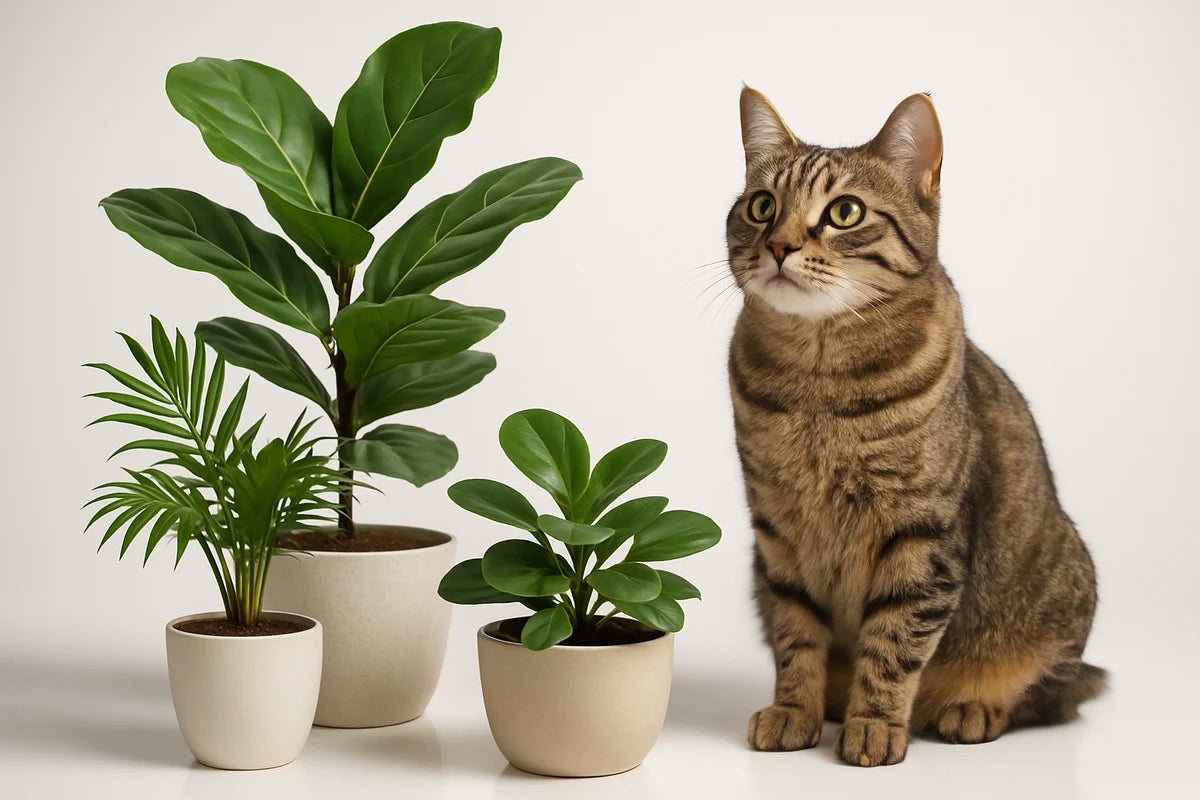
Zimmerpflanzen geben einem Zuhause ein belebtes Gefühl. Sie mildern harte Kanten, bringen Farbe und können Ihnen sogar helfen, drinnen mehr auf Licht und Feuchtigkeit zu achten. Aber wenn Sie Ihren Raum mit einer Katze teilen, die an Blättern knabbert, oder einem Hund, der alles Neue probiert, wird der Pflanzenkauf schnell knifflig.
Dieser Leitfaden führt Sie durch haustiersichere Zimmerpflanzen, die in echten Haushalten funktionieren. Sie erhalten eine solide Liste sichererer Optionen, Tipps zur Platzierung und Pflege sowie einen einfachen Plan, was zu tun ist, wenn Ihr Haustier doch einmal zubeißt.
Was „haustiersicher“ wirklich bedeutet (und was nicht)

Wenn Leute von „haustiersicheren Zimmerpflanzen“ sprechen, meinen sie meist Pflanzen, von denen nicht bekannt ist, dass sie Vergiftungen bei Katzen oder Hunden verursachen. Das ist ein guter Anfang, aber es ist kein Freifahrtschein.
- Selbst ungiftige Pflanzen können den Magen verstimmen, wenn ein Haustier viel davon frisst.
- Haustiere können an zähen Blättern ersticken oder Erde aufgraben und Perlit- oder Rindenstücke verschlucken.
- Düngemittel, Pestizide und Blattglanzsprays können Probleme verursachen, selbst wenn die Pflanze selbst sicher ist.
Für die zuverlässigsten Informationen zur Toxizität überprüfen Sie Pflanzen in den Pflanzenlisten der ASPCA. Falls es zu einer möglichen Aufnahme kommt, bietet der Vergiftungsleitfaden der AVMA einen klaren, praktischen Überblick darüber, worauf zu achten ist und was als Nächstes zu tun ist.
Schnelle Regeln für die Auswahl haustiersicherer Zimmerpflanzen

1) Kennen Sie die Gewohnheiten Ihres Haustieres
Manche Haustiere ignorieren Pflanzen. Andere behandeln sie wie Salat. Wenn Ihre Katze kaut, verzichten Sie auf alles mit schmalen, grasartigen Blättern, die „Katzengras“ imitieren, es sei denn, Sie geben ihr absichtlich eine sichere Kaupflanze.
2) Kaufen Sie die Pflanze, nicht das Etikett
Gartencenter kennzeichnen Pflanzen nicht immer korrekt. Bringen Sie den botanischen Namen mit und überprüfen Sie ihn vor dem Kauf. „Palme“ allein genügt nicht, da einige „Palmen“ keine echten Palmen sind und giftig sein können.
3) Berücksichtigen Sie Erde und Zusatzstoffe
Blumenerde, Moosauflagen und Langzeitdüngerkügelchen können genauso verlockend sein wie Blätter. Wenn Ihr Hund gerne gräbt, planen Sie schwerere Töpfe, eine Oberflächenschicht mit großen Steinen und eine Barriere wie einen Pflanzenständer ein.
12 haustiersichere Zimmerpflanzen, die gut aussehen und drinnen gut gedeihen
Die unten aufgeführten Pflanzen gelten im Allgemeinen als sichere Wahl für Katzen und Hunde, wenn sie als Zimmerpflanzen verwendet werden. Überprüfen Sie dennoch Ihre genaue Art und achten Sie auf jegliches Knabbern.
1) Grünlilie (Chlorophytum comosum)
Grünlilien sind klassisch, robust und lassen sich leicht aus „Kindeln“ vermehren. Helles, indirektes Licht hält sie voll, aber sie vertragen auch mittleres Licht. Wenn Ihre Katze gerne kaut, kann diese Pflanze besonders verlockend sein, also hängen Sie sie auf oder stellen Sie sie auf ein hohes Regal.
2) Areca-Palme (Dypsis lutescens)
Die Areca-Palme verleiht Ihnen das Gefühl eines „Baumes im Haus“ ohne viel Aufwand. Sie mag helles, indirektes Licht und regelmäßiges Gießen, sobald die oberste Erdschicht trocken ist. Sie ist auch eine beliebte Wahl für Menschen, die über Luft und Komfort in Innenräumen nachdenken. Für umfassendere Hinweise zur Raumluft (einschließlich Belüftung und Luftfeuchtigkeit) siehe die Grundlagen der Raumluftqualität der EPA.
3) Schusterpalme (Chamaedorea elegans)
Wenn Ihre Wohnung nicht viel Sonne bekommt, ist die Schusterpalme eine sichere Wahl. Sie verträgt wenig bis mittleres Licht, wächst langsam und sieht ordentlich aus. Gießen Sie sie nicht zu viel. Staunässe ist der schnellste Weg, sie zu ruinieren.
4) Schwertfarn (Nephrolepis exaltata)
Schwertfarne sehen üppig aus, gedeihen aber besser, wenn die Luftfeuchtigkeit nicht knochentrocken ist. Wenn Ihr Zuhause im Winter trocken ist, müssen Sie sprühen, Pflanzen gruppieren oder einen Luftbefeuchter verwenden. Stellen Sie ihn an einen Ort mit hellem Licht ohne direkte Sonneneinstrahlung.
5) Nestfarn (Asplenium nidus)
Sie möchten einen Farn, der moderner und weniger flauschig wirkt? Der Nestfarn hat breite, gewellte Wedel und ein ordentliches zentrales „Nest“. Gießen Sie den Boden, nicht die zentrale Krone, und halten Sie ihn von greller Sonne fern.
6) Calathea (Calathea-Arten)
Calatheas bringen kräftige Muster mit, ohne bekannte Toxizitäts-Warnzeichen für die meisten Haushalte mit Haustieren. Sie erfordern jedoch mehr Pflege: gleichmäßige Wärme, mittleres Licht und Wasser, das nicht reich an Mineralien ist. Wenn Ihr Leitungswasser weiße Krusten auf den Töpfen hinterlässt, versuchen Sie es mit gefiltertem Wasser.
7) Gebetspflanze (Maranta leuconeura)
Gebetspflanzen haben auffällige Blattadern und einen hängenden Wuchs, der gut in Ampeln passt. Sie mögen gleichmäßige Feuchtigkeit, aber keine nassen Füße. Wenn Sie eine haustiersichere Zimmerpflanze mit „Wow“-Blättern suchen, ist dies eine gute Wahl.
8) Tüpfelblatt (Hypoestes phyllostachya)
Das Tüpfelblatt setzt helle Akzente in Rosa, Rot oder Weiß. Es ist klein, wodurch es leicht außer Reichweite gehalten werden kann. Kneifen Sie es zurück, um zu verhindern, dass es vergeilt. Es eignet sich auch gut als „Schreibtischpflanze“ bei mittlerem Licht.
9) Usambaraveilchen (Saintpaulia)
Für Blumen im Innenbereich sind Usambaraveilchen kaum zu übertreffen. Sie mögen helles Licht und vorsichtiges Gießen von unten oder am Erdballen, um Blattflecken zu vermeiden. Sie bleiben kompakt und eignen sich daher gut für Regale und Beistelltische.
10) Orchidee (Phalaenopsis)
Mondorchideen sehen elegant aus, benötigen aber keine tägliche Aufmerksamkeit. Gießen Sie, wenn die Wurzeln silbrig aussehen und der Topf leicht ist. Sorgen Sie für helles, indirektes Licht und verzichten Sie auf Eiswürfel. Wenn Sie einen soliden, anfängerfreundlichen Pflegeleitfaden suchen, sind die Ressourcen der American Orchid Society zur Orchideenpflege unkompliziert.
11) Peperomia (Peperomia-Arten)
Peperomias gibt es in vielen Formen: gewellt, gestreift, rund, hängend. Die meisten bleiben klein und vertragen gelegentliches Vergessen des Gießens besser als viele tropische Pflanzen. Lassen Sie die obere Hälfte des Topfes trocknen, bevor Sie erneut gießen.
12) Haworthia (Haworthia-Arten)
Wenn Sie Sukkulenten mögen, sich aber Sorgen um die Haustiersicherheit machen, ist Haworthia oft eine bessere Wahl als viele gängige Sukkulenten. Sie bleibt kompakt, mag helles Licht und benötigt nur spärliche Bewässerung. Pflanzen Sie sie in ein grobes Substrat und lassen Sie sie nicht im Wasser stehen.
Gängige Zimmerpflanzen, die Sie bei Haustieren vermeiden sollten
Einige beliebte Zimmerpflanzen verursachen echte Probleme bei Katzen und Hunden. Wenn Ihr Haustier kaut, ist es meist am einfachsten, diese aus dem Haus zu halten.
- Lilien (hohes Risiko für Katzen)
- Palmfarn
- Einblatt (keine echte Lilie, aber reizend und unsicher beim Kauen)
- Efeutute
- Philodendron
- Dieffenbachia (Dieffenbachie)
- Glücksfeder
Wenn Sie eine Pflanze schnell nachschlagen möchten, ist die Pflanzenbibliothek der Pet Poison Helpline ein nützliches Werkzeug, um Symptome und Risikostufen zu überprüfen. Es ist auch eine gute Erinnerung daran, dass „mild“ immer noch Erbrechen, Speicheln und eine elende Nacht für alle bedeuten kann.
Wie man Pflanzen so platziert, dass Haustiere sie in Ruhe lassen
Nutzen Sie zuerst Höhe und Barrieren
Training hilft, aber die Anordnung der Pflanzen ist entscheidender. Verwenden Sie Hängepflanzen, Wandregale und hohe Pflanzenständer. Wenn Sie eine Katze haben, die überall hinspringt, wählen Sie geschlossene Räume oder hohe, schmale Regale, die keinen Landeplatz bieten.
- Hängen Sie rankende Pflanzen wie Gebetspflanzen oder Grünlilien von Sprungrouten weg.
- Verwenden Sie schwere Töpfe für Bodenpflanzen, damit Hunde sie nicht umstoßen können.
- Decken Sie die Erde mit großen, glatten Steinen ab, um das Graben zu blockieren.
Bieten Sie eine sichere „Ja“-Pflanze an
Wenn Ihre Katze Blätter kaut, geben Sie ihr absichtlich etwas Sicheres. Viele Leute verwenden Katzengras (oft Weizen, Hafer oder Gerste) als Ablenkung. Halten Sie es von Ihren Zierpflanzen getrennt, damit Ihre Katze den Unterschied lernt.
Vermeiden Sie riskante Produkte
Selbst bei haustiersicheren Zimmerpflanzen sind Ihre Pflegeprodukte wichtig.
- Vermeiden Sie systemische Insektizidgranulate in der Erde, wo Haustiere graben können.
- Verwenden Sie keine Blattglanzsprays.
- Lagern Sie Düngemittel außerhalb der Reichweite von Haustieren.
Pflegetipps, die Pflanzen gesund und Haustiere sicherer halten
Wählen Sie das richtige Licht, damit die Pflanze keine Blätter abwirft
Gestresste Pflanzen werfen Blätter ab. Lose Blätter landen auf dem Boden, und Haustiere finden sie. Passen Sie die Pflanze an Ihr Fenster an. Wenn Sie unsicher sind, beginnen Sie mit Pflanzen, die mittleres Licht vertragen, wie Schusterpalme, Peperomia oder Calathea.
Gießen Sie nach Plan und passen Sie dann an
Die meisten Pflanzentode resultieren aus Überwässerung. Eine einfache Routine hilft:
- Prüfen Sie die Erde mit dem Finger, bevor Sie gießen.
- Gießen Sie vollständig, bis es abfließt, dann leeren Sie den Untersetzer.
- Warten Sie, bis die Pflanze es wieder braucht.
Sammeln Sie abgefallene Blütenblätter und Blätter auf
Das klingt offensichtlich, ist aber wichtig. Katzen spielen mit Blättern unter Möbeln. Hunde verschlucken sie, bevor Sie es merken. Ein kurzes Fegen alle paar Tage verhindert viele Probleme.
Was tun, wenn Ihr Haustier eine Zimmerpflanze frisst?
Bleiben Sie ruhig und handeln Sie schnell. Raten Sie nicht. Warten Sie nicht auf Symptome, um „abzuwarten, was passiert“.
- Entfernen Sie Pflanzenteile aus dem Maul Ihres Haustieres, wenn Sie dies sicher tun können.
- Identifizieren Sie die Pflanze (machen Sie ein klares Foto der gesamten Pflanze und eine Nahaufnahme der Blätter).
- Rufen Sie Ihren Tierarzt, einen Notfalltierarzt oder eine Tiergiftnotrufzentrale an und nennen Sie den Pflanzennamen und die gefressene Menge.
- Achten Sie auf Anzeichen wie Speicheln, Erbrechen, Durchfall, Kratzen am Maul, Atembeschwerden oder Lethargie.
Wenn Sie Hilfe bei der Identifizierung einer Pflanze benötigen, kann die praktische Community auf r/houseplants manchmal schnell helfen, aber behandeln Sie dies als Hilfsmittel, nicht als medizinischen Rat. Ihr Tierarzt sollte die nächsten Schritte leiten.
Wie man haustiersichere Zimmerpflanzen kauft, ohne Geld zu verschwenden
Beginnen Sie mit zwei bis drei einfachen Pflanzen
Wenn Sie neu in der Pflanzenpflege sind, kaufen Sie nicht gleich zehn auf einmal. Wählen Sie eine kleine Auswahl, die Sie am Leben erhalten können, und erweitern Sie dann. Gute Starterkombinationen:
- Schusterpalme + Peperomia + Usambaraveilchen
- Grünlilie (hoch gehängt) + Gebetspflanze + Haworthia
- Areca-Palme + Nestfarn + Orchidee
Vor dem Kauf auf Schädlinge prüfen
Überprüfen Sie die Blattunterseiten auf Flecken, Spinnweben oder klebrige Rückstände. Isolieren Sie neue Pflanzen, wenn möglich, eine Woche lang. Das hält Probleme eingedämmt und reduziert den Bedarf an Schädlingssprays.
Fragen Sie nach dem botanischen Namen
Umgangssprachliche Namen führen zu Verwechslungen. Eine „Gummipflanze“ kann in einem Geschäft eine giftige Ficus-Art und in einem anderen eine ungefährliche Peperomia bedeuten. Der lateinische Name bewahrt Sie davor.
Eine einfache Pflanzenliste, die Sie auf Ihrem Telefon speichern können
Wenn Sie eine kurze Liste haustiersicherer Zimmerpflanzen zum Starten möchten, speichern Sie diese:
- Schusterpalme (Chamaedorea elegans)
- Areca-Palme (Dypsis lutescens)
- Grünlilie (Chlorophytum comosum)
- Gebetspflanze (Maranta leuconeura)
- Calathea (Calathea-Arten)
- Peperomia (Peperomia-Arten)
- Schwertfarn (Nephrolepis exaltata)
- Nestfarn (Asplenium nidus)
- Usambaraveilchen (Saintpaulia)
- Phalaenopsis-Orchidee (Phalaenopsis)
- Tüpfelblatt (Hypoestes phyllostachya)
- Haworthia (Haworthia-Arten)
Fazit
Sie müssen sich nicht zwischen einem Zuhause mit Pflanzen und einem Zuhause mit Haustieren entscheiden. Sie brauchen nur die richtigen Pflanzen und eine Einrichtung, die dem Verhalten Ihrer Katze oder Ihres Hundes entspricht. Beginnen Sie mit ein paar bewährten haustiersicheren Zimmerpflanzen, platzieren Sie sie sorgfältig und halten Sie eine zuverlässige Toxizitätsliste bereit. Ihre Pflanzen werden besser aussehen, und Sie werden sich weniger Sorgen machen, wenn Ihr Haustier neugierig wird.